
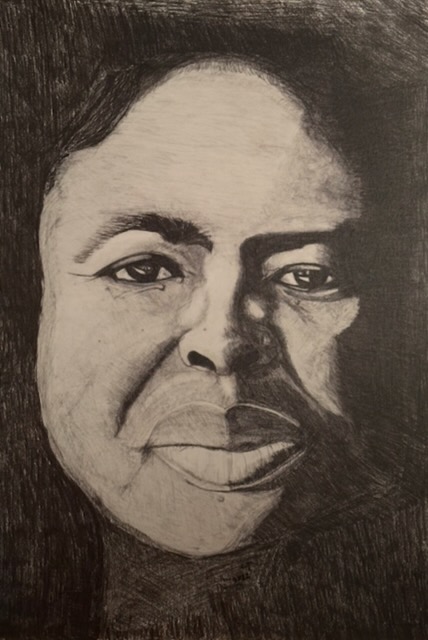
Fannie Lou Hamer was beaten for wanting something millions of Americans now possess and too often leave unused: The vote. That fact should disturb us.
Hamer was born in Mississippi in 1917, the youngest of twenty children and the granddaughter of enslaved people. She entered cotton fields as a child and grew into adulthood inside the brutal architecture of Jim Crow—a system in which racial segregation, economic dependency and political disenfranchisement reinforced one another.
She was forty-four years old before she learned that she could register to vote. Think about that. Our Constitution supposedly belonged to her. Citizenship supposedly belonged to her. Yet the political system surrounding her had been constructed so effectively against Black participation that Hamer could reach middle age without knowing that the ballot legally belonged to her too!
When she attempted to claim it in 1962, the response was immediate. She faced a discriminatory literacy test. The plantation owner for whom she worked demanded that she withdraw her registration attempt. She refused and lost her home and livelihood. White supremacists later fired sixteen bullets into the house where she had been staying.
And she kept going. In 1963, after returning from a voter-registration workshop, Hamer and fellow activists were arrested in Winona, Mississippi. During four days in jail, she was brutally beaten. The injuries damaged her kidney, affected an eye and worsened the limp she already carried from childhood polio.
And she kept going. This is where we misunderstand Fannie Lou Hamer if we reduce her to an inspiring quotation on a poster. She was fighting for power. Not power for herself. Political power for her people whose government exercised enormous authority over their lives while systematically obstructing their ability to participate in choosing that government.
Hamer became a SNCC field secretary. She helped organize Freedom Summer. She co-founded the Mississippi Freedom Democratic Party, which directly challenged Mississippi’s segregationist political establishment.
Then she raised political representation from Mississippi before America. At the 1964 Democratic National Convention, Hamer testified before the Credentials Committee about what Black citizens endured merely attempting to exercise their constitutional rights. The Mississippi Freedom Democratic Party challenged the state’s all-white delegation and demanded representation for citizens excluded from meaningful participation in the political system.
Hamer was no longer simply asking: Can I vote?
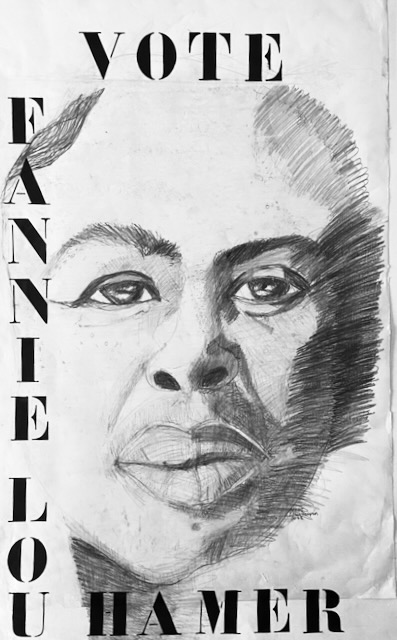
Her movement was asking: Who has the right to govern us when we have been prevented from choosing who governs us? That question reaches directly into 2026.
What Did We Fight For? The Civil Rights Act of 1964 and Voting Rights Act of 1965 were not gifts benevolently handed to Black Americans. We emerged from years of litigation, organizing, demonstrations, voter-registration campaigns, political negotiation and sacrifice involving thousands of people and organizations including SNCC, SCLC, CORE and the NAACP. Hamer’s Mississippi organizing and nationally broadcast testimony were part of that larger movement.
People lost jobs. People lost homes. People were jailed. People were beaten. People were murdered. We persisted because we understood something that should still be obvious: Political power affects the conditions under which we live.
Congress writes federal laws and controls federal appropriations. State legislatures make laws governing enormous portions of everyday life. Local officials administer schools, policing, elections, transportation and public services. Voting does not guarantee that government will do what any individual citizen wants. It does something more fundamental. It gives citizens a mechanism for deciding ‘who’ receives governmental power and for removing representatives from office through subsequent elections. That is accountability. And Now We Must Exercise our Rights to Have the Ballot
In the 2024 presidential election, approximately 154 million citizens reported voting. The Census Bureau calculated turnout at 65.3% of the citizen voting-age population. Other analyses using the voting-eligible population put turnout around 64%. That means tens of millions of Americans who were eligible to participate did not. The precise number depends upon how eligibility is calculated, but roughly 90 million eligible Americans did not cast a ballot.
That number stops me. I think about Fannie Lou Hamer lying in a Mississippi jail after being beaten. I think about losing your livelihood because you tried to register. I think about people being threatened because they wanted their names placed on a voter roll. And then I think about all the people who possess that right today and simply deciding that participation does not matter!
There are legitimate reasons some citizens encounter difficulty voting, and nonvoters are not one homogeneous group. But ‘voluntary political disengagement’ deserves serious examination because democracy cannot operate nor tolerate spectatorship!
Citizenship carries responsibility as well as rights. 2026: The Question Returns to Us.
The 2026 midterm elections will elect all 435 members of the U.S. House of Representatives and approximately one-third of the United States Senate. Whatever a citizen’s political philosophy, those elections determine who will exercise legislative power. That makes 2026 not merely another campaign season. It is another opportunity for citizens to answer the question Hamer’s life places before us:
Who should possess political power—and will we participate in deciding?
Hamer’s answer was participation requires that we do the following: register, organize, speak, run for office, demand representation, vote, and hold government accountable, Then continue to organize.
Ms Hamer’s generation struggled to transform constitutional promises into rights that could actually be exercised. Our generation inherits both those rights and the responsibility of deciding what to do with them. The Constitution speaks of forming “a more perfect Union.” That work belongs to every generation.
Fannie Lou Hamer’s face therefore should not remain safely confined to Black history or Civil Rights history. She belongs in the American conversation of 2026 because she forces us to confront an uncomfortable question:
What kind of democracy do we actually want?
Her life demonstrates what it cost when millions of Americans were deliberately excluded from political power. Today, the ballot is available to millions for whom earlier generations fought to make it meaningful. What we do with that inheritance is ours to decide.
But after Fannie Lou Hamer, we cannot say we were never shown what it was worth!
Article and Art by Lillian L Thompson, founder of Lillianonline.us